Fabric Moisture Permeability Testing: JIS L 1099 B-1
How Is Fabric Moisture Permeability Tested? Understanding JIS L 1099 B-1
For outdoor jackets, skiwear and rainwear, moisture permeability is an important factor in fabric selection. A fabric may provide good protection against rain, but its ability to transfer water vapor also affects the comfort of the finished garment.
At Shining Fabric, we work with our manufacturing partners to evaluate functional woven fabrics according to customer requirements. One of the methods used by our partner factory laboratory is JIS L 1099 B-1, the potassium acetate method.
What Is Fabric Moisture Permeability?
Moisture permeability describes the ability of water vapor to pass through a fabric under specified test conditions. It is commonly expressed as a water vapor transmission rate (WVTR or MVTR), typically in g/m²/24h.
Moisture permeability should not be confused with air permeability. A fabric may restrict airflow while still allowing water vapor to pass through its construction or membrane.
What Is the JIS L 1099 B-1 Potassium Acetate Method?
JIS L 1099 B-1 is a Japanese test method used to evaluate the water vapor transmission performance of textile materials. It uses a potassium acetate desiccant system and controlled test conditions to determine moisture transfer through a specimen.
This method is particularly relevant when evaluating waterproof-breathable fabrics used in outdoor apparel, including coated and laminated woven fabrics.
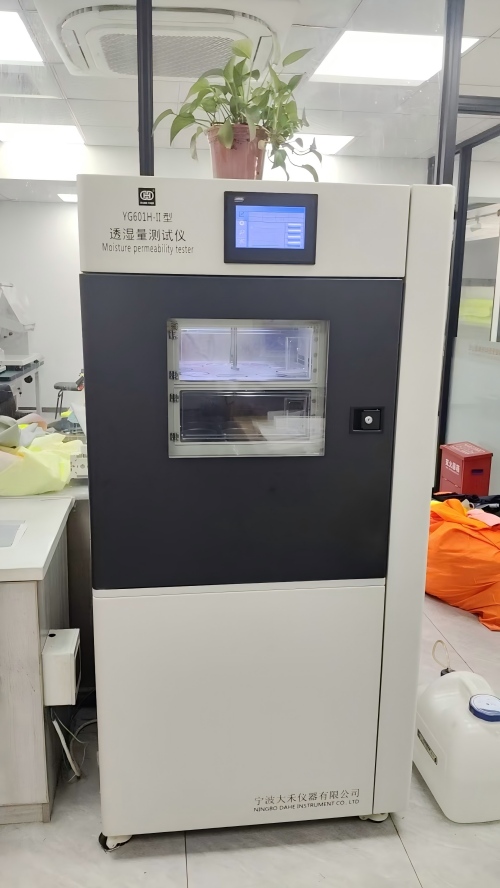
How the Moisture Permeability Test Is Performed
The following is a simplified overview of the testing procedure used at our partner factory laboratory. Actual specimen preparation, conditioning, calculations and reporting follow the applicable standard operating procedure.
1. Specimen Preparation
Three fabric specimens are prepared, approximately 200 × 200 mm each, together with the specified auxiliary film. The specimens are mounted in the appropriate holders.
2. Controlled Conditioning
The mounted specimens are conditioned using a temperature-controlled water bath and circulating air under the conditions specified by the method.
3. Test Cup Preparation
The specified potassium acetate desiccant is placed into the test cups. The auxiliary film and cup assembly are prepared and weighed using a precision balance.
4. Moisture Transfer Measurement
The test assemblies are exposed to the prescribed conditions. Changes in mass are measured over the specified interval to evaluate water vapor transfer.
5. Result Calculation
Results are calculated according to the JIS L 1099 B-1 procedure and reported using the required units and rounding rules. Multiple specimens are tested to obtain a representative result.
Why Does the Test Method Matter?
When purchasing waterproof-breathable fabrics, customers often specify a moisture permeability value. However, the number alone is not enough to define the requirement.
Different testing methods use different temperature, humidity and measurement conditions. Therefore, results from JIS L 1099 B-1 should not be directly compared with values obtained using other methods without an appropriate technical basis.
For accurate fabric development and quotation, we recommend confirming:
- The required test standard and method
- The target moisture permeability value and unit
- The fabric construction and finishing requirements
- Whether testing is required before bulk production
Moisture Permeability in Coated and Laminated Fabrics
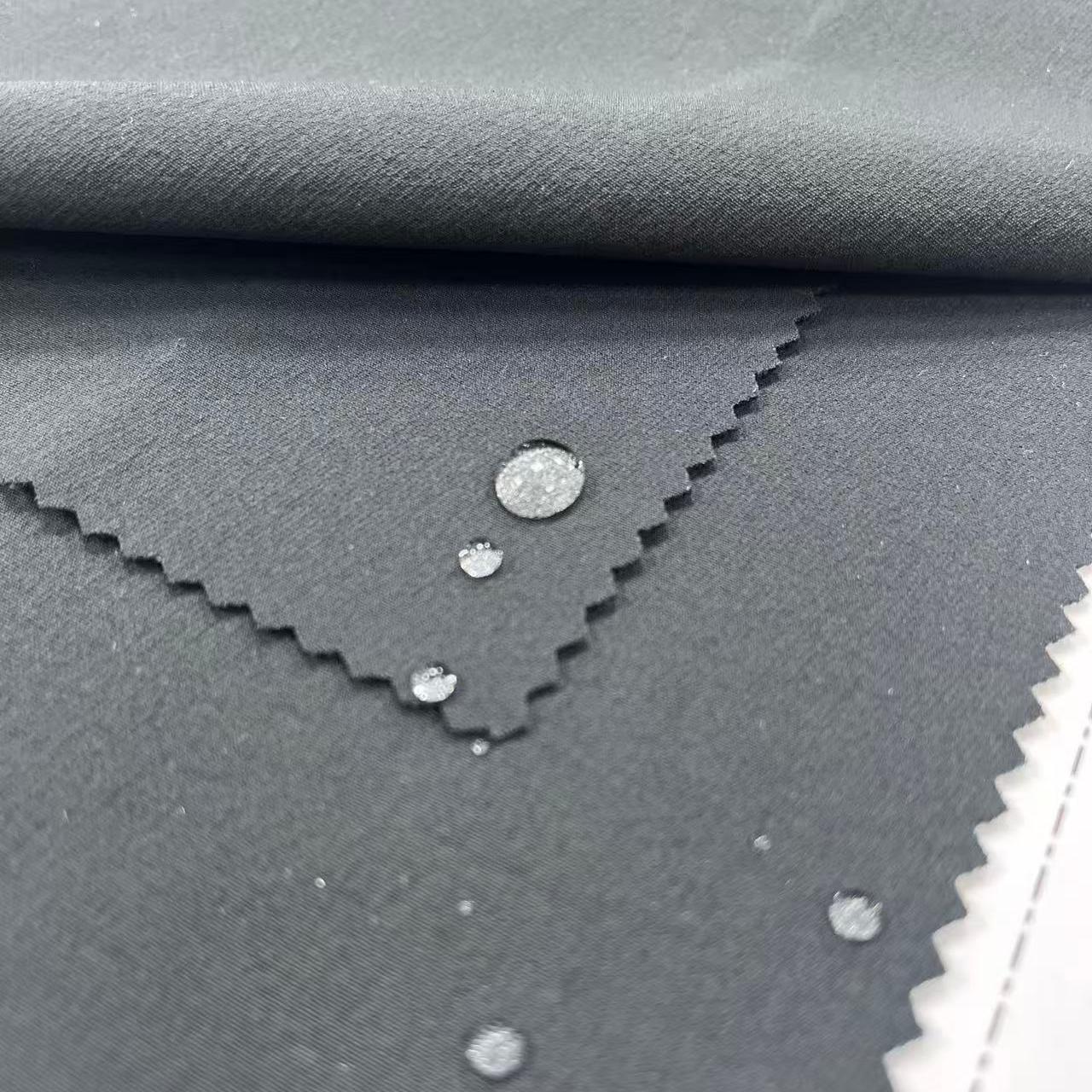
Functional outerwear fabrics may use PU coating, TPU lamination or other finishing systems to achieve specific performance requirements.
These treatments can influence water vapor transmission. The final result depends on the base fabric, coating or membrane structure, application process and test method.
For this reason, waterproof performance and moisture permeability should be evaluated together when developing fabrics for demanding outdoor applications.
How Shining Fabric Supports Fabric Testing
Shining Fabric works with manufacturing partners to develop and evaluate functional woven fabrics for outdoor apparel.
When customers provide specific performance requirements, we can coordinate with our partner factory laboratory to assess suitable fabrics and arrange relevant testing according to the project requirements.
Providing the target test standard at the beginning of development helps us recommend more suitable fabric constructions and finishing options.
Frequently Asked Questions
What does JIS L 1099 B-1 measure?
It measures water vapor transmission through textile materials under the conditions of the potassium acetate method.
Is moisture permeability the same as air permeability?
No. Moisture permeability concerns water vapor transmission, while air permeability measures airflow through a material.
Can results from different moisture permeability methods be compared?
Not directly. Different methods can produce significantly different values for the same material because their testing conditions and principles differ.
Can waterproof fabric also be moisture permeable?
Yes. Certain coated and laminated constructions can resist liquid water while allowing water vapor transmission. Performance depends on the specific fabric system.
Can Shining Fabric arrange moisture permeability testing?
We can coordinate relevant testing with our manufacturing partners according to the fabric specifications and customer requirements. Please confirm the required standard and target performance before testing.
Looking for Waterproof-Breathable Fabric?
If you are developing skiwear, outdoor jackets or rainwear, send us your fabric specifications, target waterproof performance and required moisture permeability test method.
Contact Shining Fabric to discuss fabric selection, development and testing requirements.
Website: www.shiningfabric.com