20K/10K vs 20K/15K Waterproof Breathable Fabric | Shining Textile
20K/10K vs 20K/15K: Testing a Higher-Breathability Membrane on the Same Shell Fabric
When developing a technical hardshell jacket, choosing the right shell fabric is only part of the process. The waterproof and breathable membrane also plays an important role in the final performance.
Recently, we worked on a fabric development project where the shell fabric had already been selected, but the customer wanted to improve the breathability from 10,000 to 15,000 g/m²/24h, while maintaining a waterproof target of 20,000 mmH₂O.
Instead of starting with a completely different fabric, we prepared a new membrane reference sample using the selected shell fabric.
Here is how we approached the development.
1. Understanding the 20K/10K and 20K/15K Specifications
Waterproof breathable fabrics are often described using two performance figures.
| Specification | Waterproof Target | Breathability Target |
|---|---|---|
| 20K/10K | 20,000 mmH₂O | 10,000 g/m²/24h |
| 20K/15K | 20,000 mmH₂O | 15,000 g/m²/24h |
The first figure refers to hydrostatic pressure resistance. The second refers to moisture vapor transmission.
A higher breathability figure may indicate improved moisture vapor transmission, but results must be compared using the same testing method.
For example, JIS L 1099 B-1 is one method used to evaluate moisture vapor transmission. Results obtained using different methods should not be treated as directly interchangeable.
2. Why We Kept the Same Shell Fabric
During the initial selection process, the customer compared several woven shell fabrics before choosing one based on its overall balance of:
Soft hand feel
Low fabric noise
Suitable weight
Flexibility
Surface appearance
Expected durability
Once the shell fabric was selected, the next step was to evaluate a higher-breathability membrane.
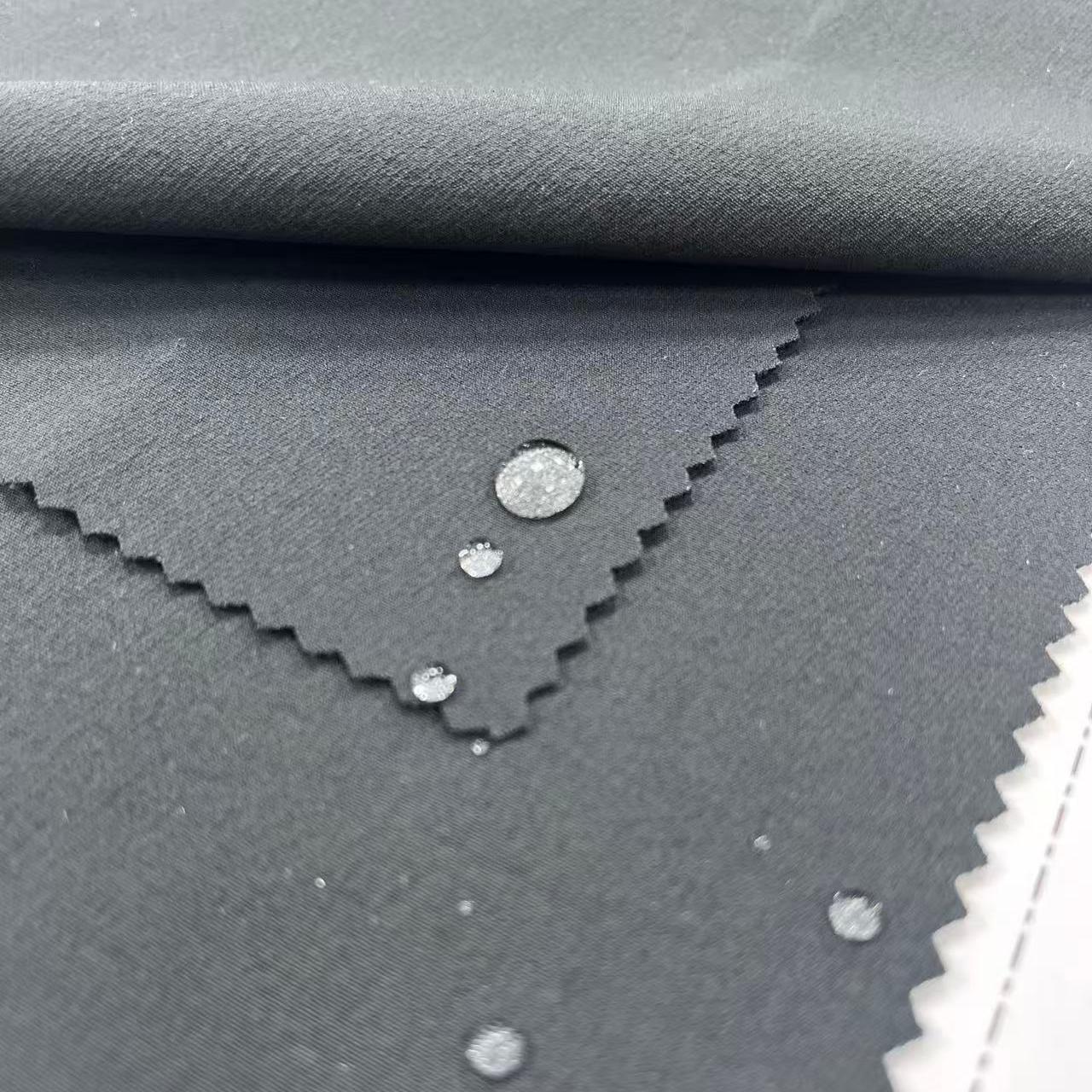
We prepared a 20K/15K membrane reference sample using the selected shell fabric.
This approach helps reduce the number of variables during evaluation. The customer can focus on whether the updated lamination affects the fabric's hand feel, flexibility, noise and appearance.
However, changing the membrane may also affect the final laminated fabric. These characteristics still need to be checked on the actual sample.
3. Hydrostatic Pressure Testing During Sample Development
Waterproof performance cannot be confirmed by membrane specifications alone. The laminated fabric must also be evaluated.
During this development, we carried out a hydrostatic pressure test using a YG825G automatic water resistance tester.
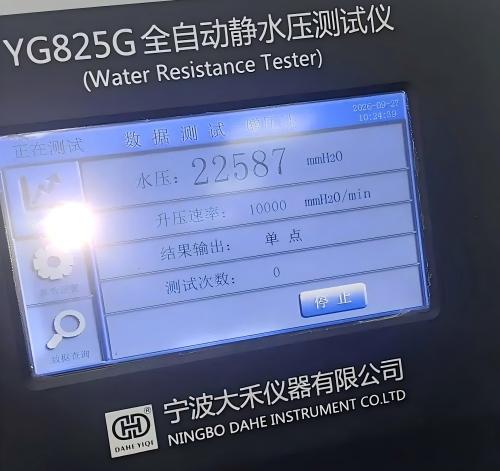
The instrument displayed 22,587 mmH₂O during the test, with a pressure increase rate of 10,000 mmH₂O/min.
This was an observed reading during testing, rather than a confirmed final test result.
The photograph provides a useful record of the development process, while the final waterproof rating must be assessed according to the complete test results and the specified testing standard.
4. Recording Breathability Test Data
Waterproof resistance and breathability are different performance characteristics, so they need to be evaluated separately.
For this development sample, our internal testing record included a moisture vapor transmission reading of 26,737.
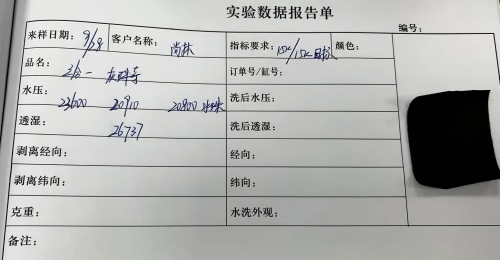
The original record did not specify the test method or unit alongside this figure. Therefore, it should be treated as an internal development reading rather than a verified JIS L 1099 B-1 result.
For production approval, the test method, units and final performance requirements should be clearly agreed upon.
5. Why Physical Sample Evaluation Still Matters
Technical specifications are important, but numbers alone do not determine whether a fabric is suitable for a premium outdoor jacket.
After the membrane reference sample is prepared, we recommend checking:
Whether the fabric remains sufficiently soft and flexible
Whether the lamination increases fabric noise
Whether the surface appearance remains acceptable
Whether the overall weight meets the design requirements
Whether the waterproof and breathable performance meets the agreed specifications
For premium hardshell jackets, the final decision often depends on a combination of laboratory performance and physical fabric characteristics.
6. From Reference Sample to Development Yardage
A membrane reference sample is an early step in the development process.
Once the customer approves the initial fabric characteristics, the next stage may involve preparing a small quantity of development yardage for garment sampling and further testing.
At Shining Textile, our typical development process includes:
Reviewing the customer's target specifications.
Selecting suitable shell fabrics from available qualities.
Preparing A4 swatches for initial evaluation.
Developing membrane and finishing options.
Preparing development yardage when required.
Confirming the final specifications before bulk production.
This process helps identify potential issues before committing to a larger production order.
Looking for Waterproof Breathable Fabric for Your Next Collection?
At Shining Textile, we supply woven synthetic fabrics for outdoor jackets, rainwear, skiwear and other technical apparel.
We can discuss different shell fabrics, membrane lamination options, C0 water-repellent finishes and custom performance requirements.
Send us your target fabric weight, waterproof rating, breathability requirement and intended application.
We will help you review suitable fabric options and the next steps for sampling.
Contact: shiningfabric@shiningfabric.com
Website: www.shiningfabric.com